
The statistics for food startups are notoriously brutal, nearly 90% fail within their first few years. But in 2011, the odds stacked against Sanam Kapoor were even worse. Entering the Indian pizza market meant going head-to-head with an international legacy brand that held a staggering 54% market monopoly. They had deeper pockets, established supply chains, and absolute dominance over urban consumers.
Most entrepreneurs would look at those numbers and walk away. Sanam Kapoor left his stable IT career to out-maneuver them.
What started as a single, survival-focused storefront in Chandigarh didn’t just survive; it scaled aggressively. Today, La Pino’z stands as a dominant force with over 600 outlets, crossing a ₹1,000 Crore turnover and expanding globally into London, Dubai, Canada, and Australia.
Here is the strategic playbook they used to rewrite the rules of the food industry.
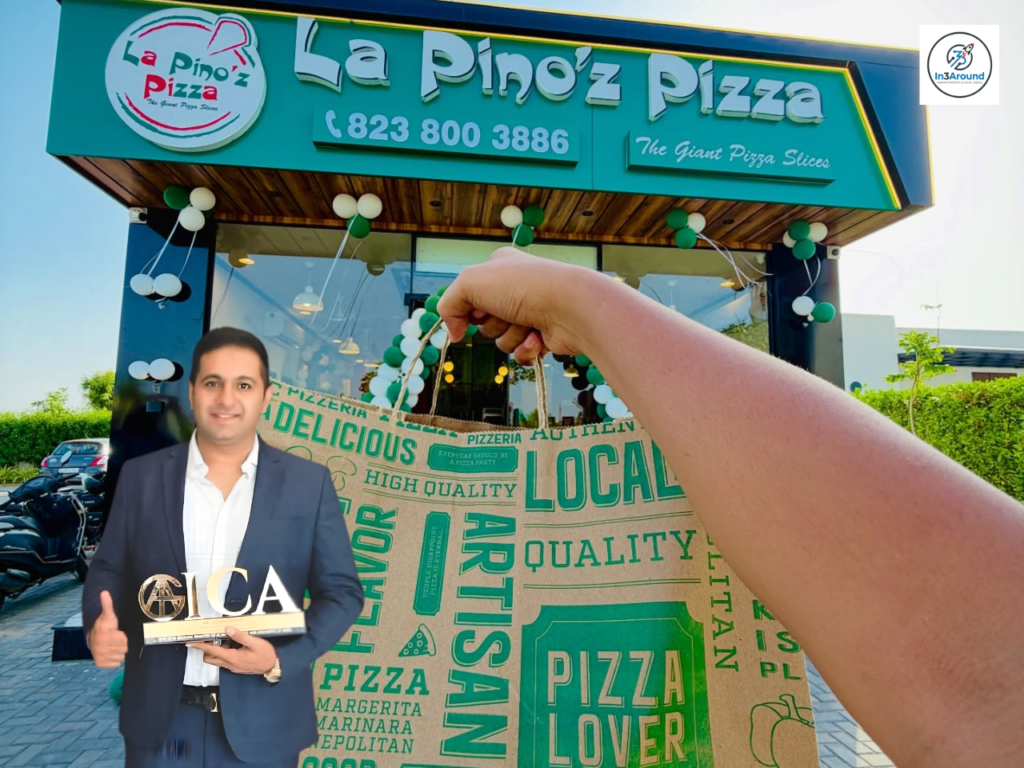
1. Rewriting the Product Architecture
Legacy players in the market had long forced a specific buying habit onto consumers: if you wanted pizza, you bought the whole pie. La Pino’z recognized a massive gap in consumer flexibility and introduced single-slice pizzas.
This seemingly simple shift completely changed consumer behavior. It allowed budget-conscious diners and students to experiment with premium flavors without the financial commitment of a full-size pizza. By lowering the barrier to entry, they pulled a massive volume of foot traffic away from the giants.
2. Prioritizing Hyper-Local Customization over Uniformity
Global chains often try to force a standardized, blanket menu across an entire country. La Pino’z took the exact opposite approach. They engineered their menu to adapt to regional Indian palates, leaning heavily into local spices and flavor profiles that international chains couldn’t authentically replicate.
Furthermore, they solved a massive cultural challenge in India’s food ecosystem: catering to a predominantly vegetarian demographic. Instead of forcing a rigid corporate strategy on their partners, La Pino’z gave individual franchise owners the autonomy to decide whether to run a 100% fully vegetarian kitchen or offer a mixed menu based on local demand.
3. High-Velocity Operations & Premium Quality
Competing on price often forces brands to compromise on quality, but La Pino’z focused on absolute operational efficiency to maintain a premium standard. While major chains relied heavily on frozen bases and central distribution centers, La Pino’z committed to preparing fresh dough every three hours in every single kitchen. By combining an ultra-competitive pricing strategy with a strictly fresh, high-quality product, they created an unbeatable value proposition.
The Takeaway for Modern Startups
Market leaders do not stay leaders by accident, but they are never invincible. They remain dominant only until an agile, hyper-focused, and aggressive competitor decides to look at the market through a completely fresh lens.
La Pino’z didn’t build a ₹1,000 Crore empire by trying to match the deep-pocketed marketing budgets of global giants. They won by understanding the local consumer better, moving faster, and building an operational playbook that simply could not be replicated from an overseas boardroom.